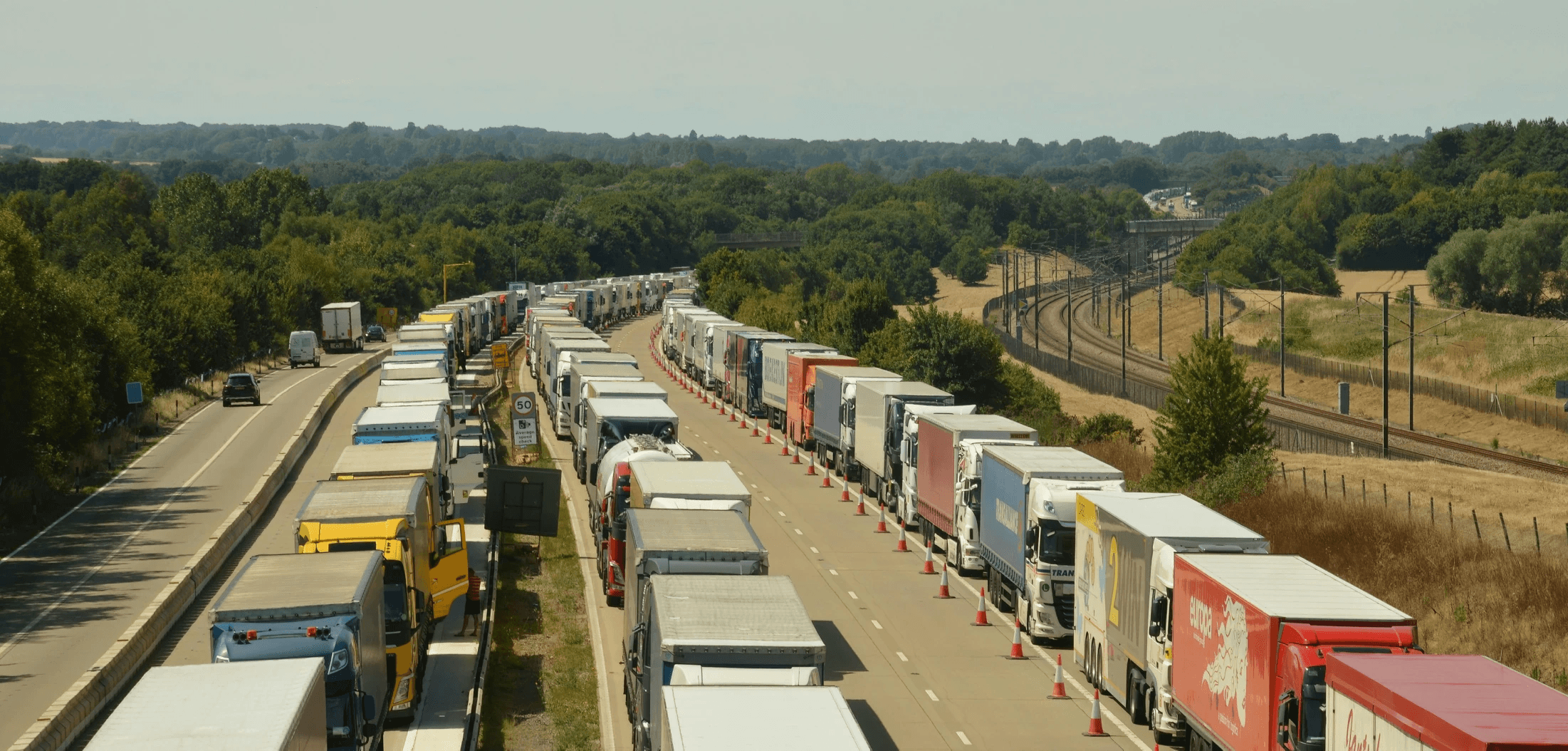
Overview
This project explored how freight shipments are coordinated within the Jordanian haulage ecosystem. The initial aim was to understand how drivers access work, how fairness is maintained, and why coordination between stakeholders often breaks down.
Rather than starting with a predefined problem, the project focused on observing real practices and learning how the system operates from the perspectives of drivers, logistics managers, and supporting actors.
From an external perspective, freight coordination appeared fragmented and inefficient, with shipments arranged through phone calls, informal messaging, and manual decision-making, and an official queue-based system that existed on paper but rarely worked as intended. At this stage, the problem was broadly framed as a coordination and transparency issue, without a clear understanding of the underlying causes.
2022 · 6 months
Role
Early interviews revealed only partial explanations. WhatsApp was frequently mentioned, but initially described as a secondary or temporary coordination channel. Gaining a deeper understanding required multiple interview rounds and the involvement of a trusted community member who helped establish credibility, and as trust developed, participants began to share practices that weren't visible in formal processes or early conversations.
Through sustained engagement, a different picture emerged. Drivers fall into two main groups: freelancers and company-affiliated drivers. Although a monthly shipment quota was intended to ensure fairness, it was rarely enforced consistently, and shipments were often shared through large WhatsApp groups or direct calls, where speed, social connections, and digital confidence determined access.
Older and illiterate drivers relied on memorized interaction patterns, voice messages, or younger family members to compete. What appeared chaotic on the surface was actually a fragile social system compensating for the absence of enforceable structure, shaped by social norms rather than documented rules.
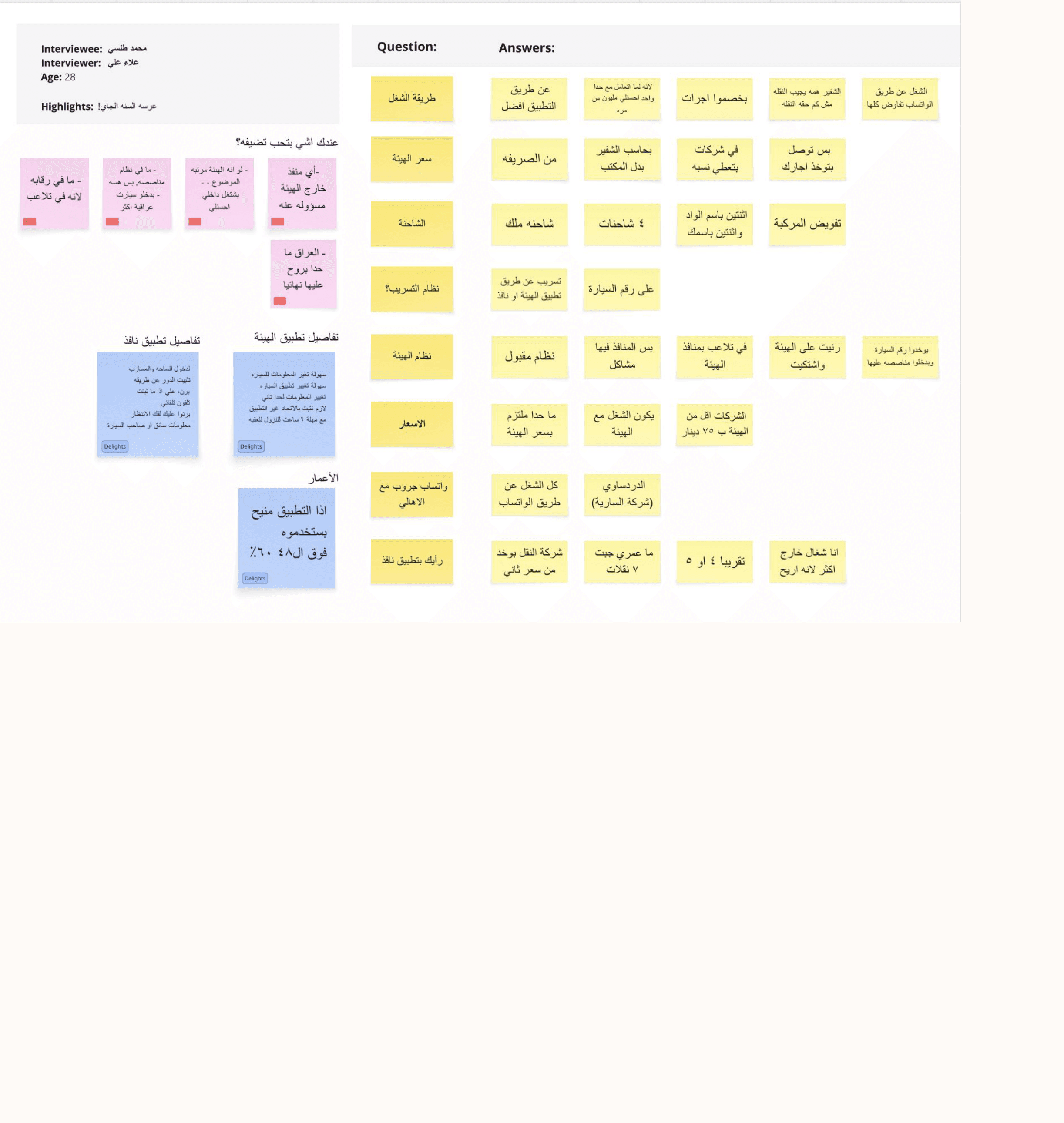
The core challenge was not the lack of digital tools, but the lack of systemic fairness, accessibility, and transparency. Informal coordination channels filled this gap, but at the cost of equity and predictability. Any meaningful intervention needed to work within these realities rather than attempt to replace them.
Instead of introducing a new application that would exclude many drivers, the design direction treated WhatsApp as an intentional service touchpoint rather than a workaround. The focus shifted toward embedding fairness and structure into backend logic, while preserving familiar interaction patterns for drivers.
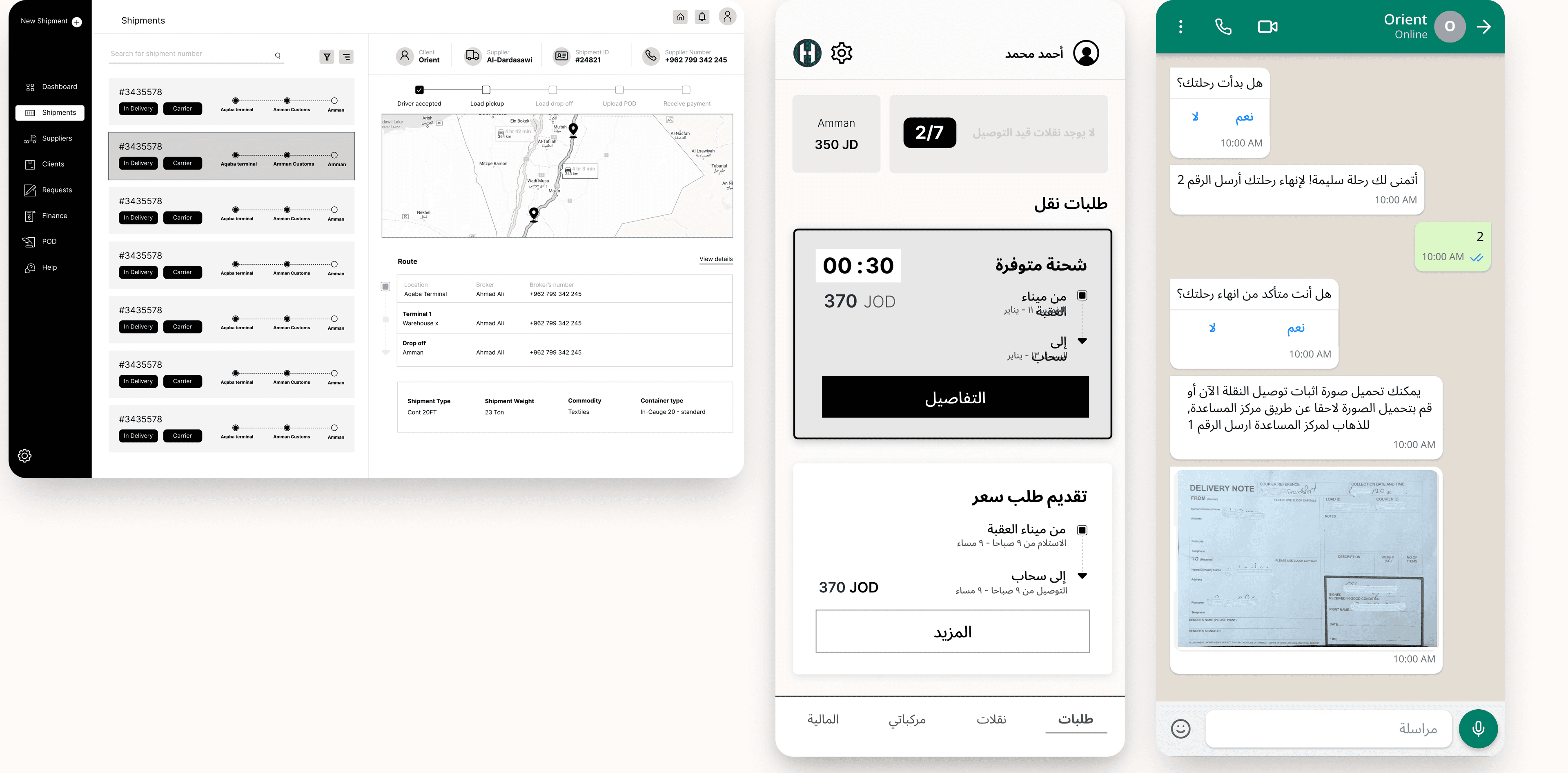
To validate the service model, key touchpoints were translated into low-fidelity wireframes, testing how service logic could operate across users with different capabilities.
Admin Portal (Backstage), a web-based admin interface that let logistics managers post shipments, manage monthly driver quotas, and monitor distribution fairness. Complexity was intentionally concentrated in this layer to protect drivers from operational burden.
Driver Application (Optional Frontstage), a minimal application explored for digitally confident drivers, focusing on clarity, shipment confirmation, and status updates without unnecessary features.
WhatsApp Integration (Primary Frontstage), where WhatsApp was treated as the primary interaction layer, with wireframes for shipment notifications, acceptance prompts, and confirmations through familiar message patterns, including support for voice-based interaction.
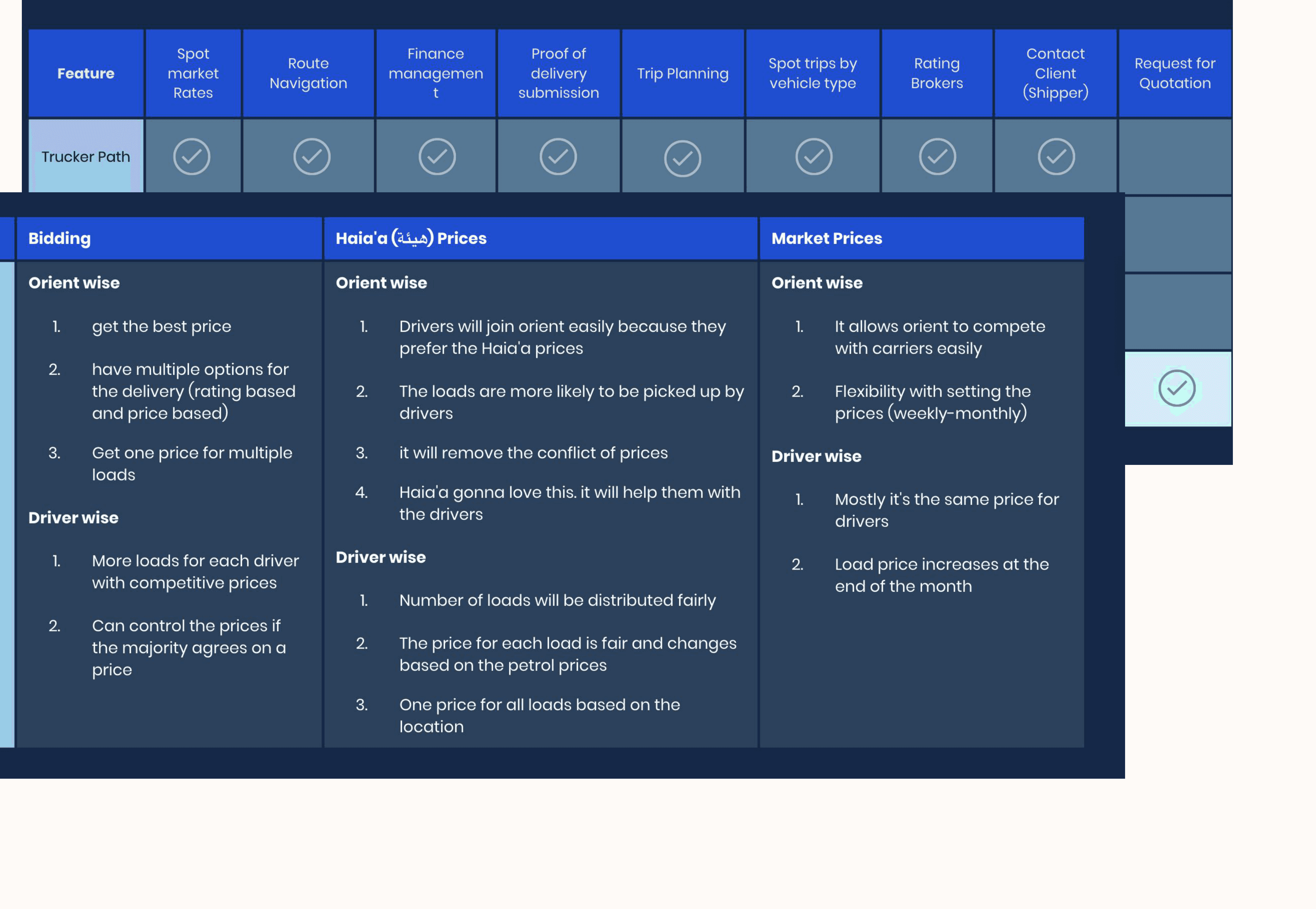
We analyzed existing freight applications to identify both strengths and weaknesses. Investigating the market helped us understand market gaps, pinpoint the vital features that are needed, and allowed us to incorporate innovative features that enhance the experience for all stakeholders, leading to less time wasted and a more streamlined, efficient process.
Informal systems can be as critical as formal ones, since WhatsApp groups, family networks, and memorised routines functioned as core infrastructure, not temporary workarounds.
Understanding that system required trust before insight, and designing for it meant treating accessibility as systemic rather than a feature, building around behaviours drivers already had instead of introducing new ones.
Service design also extended past the user: improving the driver experience meant addressing admin workflows, allocation logic, and the power dynamics between companies and freelancers.
Let's make something great!